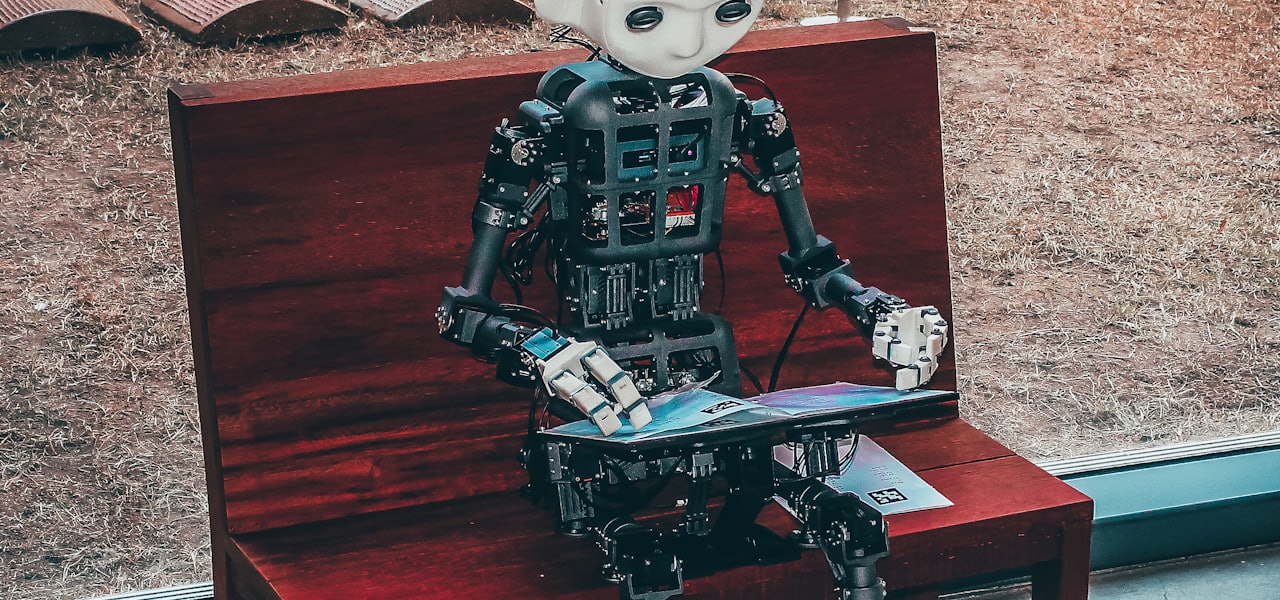
The Conference on Artificial General Intelligence (AGI) is a meeting of researchers in the field of artificial general intelligence (AGI) organized by the AGI Society steered by Marcus Hutter and Ben Goertzel. It has been held annually since 2008. The conference was initiated by the 2006 Bethesda Artificial General Intelligence Workshop and has since been hosted at various international venues. == Locations and history == AGI-2026 San Francisco State University, California, USA AGI-2025 Reykjavík University, Reykjavík, Iceland AGI-2024 University of Washington, Seattle, Washington, USA AGI-2023 KTH Royal Institute of Technology, Stockholm, Sweden AGI-2022 The Crocodile, Seattle, Washington, USA AGI-2021 Computer History Museum, Mountain View, California, USA AGI-2020 Virtual Conference AGI-2019 Sheraton Shenzhen Futian, Shenzhen, China AGI-2018 Czech Technical University, Prague, Czech Republic AGI-2017 ibis Melbourne, Melbourne, Australia AGI-2016 The New School, New York, New York, USA AGI-2015 Berlin-Brandenburg Academy of Sciences and Humanities, Berlin, Germany AGI-2014 Université Laval, Quebec City, Canada (sponsored by the Cognitive Science Society and the AAAI) AGI-2013 Peking University, Beijing, China (sponsored by the Cognitive Science Society and the AAAI) AGI-2012 University of Oxford, Oxford, United Kingdom (sponsored by the Future of Humanity Institute and Ray Kurzweil) AGI-2011 Google Headquarters, Mountain View, California, USA (sponsored by Google, AAAI, and Ray Kurzweil) AGI-2010 University of Lugano, Lugano, Switzerland (In Memoriam Ray Solomonoff and sponsored by AAAI and Ray Kurzweil) AGI-2009 Crowne Plaza Crystal City, Arlington, Virginia, USA (sponsored by AAAI and Ray Kurzweil) AGI-2008 University of Memphis, Tennessee, USA (sponsored by AAAI) == Notable speakers == The conference has attracted many speakers over the years including Turing Award winners Yoshua Bengio and Richard S. Sutton as well as Ben Goertzel, Marcus Hutter, Jürgen Schmidhuber, Gary Marcus, John E. Laird, Peter Norvig, Joscha Bach, François Chollet, John L. Pollock, Bill Hibbard, Hugo de Garis, Stan Franklin, Steve Omohundro, Randal A. Koene, Ernst Dickmanns, Margaret Boden, David Hanson, Roman Yampolskly, Selmer Bringsjord, Kristinn R. Thórisson and Nick Bostrom.
Round-trip engineering
Round-trip engineering (RTE) in the context of model-driven architecture is a functionality of software development tools that synchronizes two or more related software artifacts, such as, source code, models, configuration files, documentation, etc. between each other. The need for round-trip engineering arises when the same information is present in multiple artifacts and when an inconsistency may arise in case some artifacts are updated. For example, some piece of information was added to/changed in only one artifact (source code) and, as a result, it became missing in/inconsistent with the other artifacts (in models). == Overview == Round-trip engineering is closely related to traditional software engineering disciplines: forward engineering (creating software from specifications), reverse engineering (creating specifications from existing software), and reengineering (understanding existing software and modifying it). Round-trip engineering is often wrongly defined as simply supporting both forward and reverse engineering. In fact, the key characteristic of round-trip engineering that distinguishes it from forward and reverse engineering is the ability to synchronize existing artifacts that evolved concurrently by incrementally updating each artifact to reflect changes made to the other artifacts. Furthermore, forward engineering can be seen as a special instance of RTE in which only the specification is present and reverse engineering can be seen as a special instance of RTE in which only the software is present. Many reengineering activities can also be understood as RTE when the software is updated to reflect changes made to the previously reverse engineered specification. === Types === Various books describe two types of RTE: partial or uni-directional RTE: changes made to a higher level representation of a code and model are reflected in lower level, but not otherwise; the latter might be allowed, but with limitations that may not affect higher-level abstractions full or bi-directional RTE: regardless of changes, both higher and lower-level code and model representations are synchronized if any of them altered === Auto synchronization === Another characteristic of round-trip engineering is automatic update of the artifacts in response to automatically detected inconsistencies. In that sense, it is different from forward- and reverse engineering which can be both manual (traditionally) and automatic (via automatic generation or analysis of the artifacts). The automatic update can be either instantaneous or on-demand. In instantaneous RTE, all related artifacts are immediately updated after each change made to one of them. In on-demand RTE, authors of the artifacts may concurrently update the artifacts (even in a distributed setting) and at some point choose to execute matching to identify inconsistencies and choose to propagate some of them and reconcile potential conflicts. === Iterative approach === Round trip engineering may involve an iterative development process. After you have synchronized your model with revised code, you are still free to choose the best way to work – make further modifications to the code or make changes to your model. You can synchronize in either direction at any time and you can repeat the cycle as many times as necessary. == Software == Many commercial tools and research prototypes support this form of RTE; a 2007 book lists Rational Rose, Together, ESS-Model, BlueJ, and Fujaba among those capable, with Fujaba said to be capable to also identify design patterns. == Limitations == A 2005 book on Visual Studio notes for instance that a common problem in RTE tools is that the model reversed is not the same as the original one, unless the tools are aided by leaving laborious annotations in the source code. The behavioral parts of UML impose even more challenges for RTE. Usually, UML class diagrams are supported to some degree; however, certain UML concepts, such as associations and containment do not have straightforward representations in many programming languages which limits the usability of the created code and accuracy of code analysis/reverse engineering (e.g., containment is hard to recognize in the code). A more tractable form of round-trip engineering is implemented in the context of framework application programming interfaces (APIs), whereby a model describing the usage of a framework API by an application is synchronized with that application's code. In this setting, the API prescribes all correct ways the framework can be used in applications, which allows precise and complete detection of API usages in the code as well as creation of useful code implementing correct API usages. Two prominent RTE implementations in this category are framework-specific modeling languages and Spring Roo (Java). Round-trip engineering is critical for maintaining consistency among multiple models and between the models and the code in Object Management Group's (OMG) Model-driven architecture. OMG proposed the QVT (query/view/transformation) standard to handle model transformations required for MDA. To date, a few implementations of the standard have been created. (Need to present practical experiences with MDA in relation to RTE). == Controversies == === Code generation controversy === Code generation (forward-engineering) from models means that the user abstractly models solutions, which are connoted by some model data, and then an automated tool derives from the models parts or all of the source code for the software system. In some tools, the user can provide a skeleton of the program source code, in the form of a source code template where predefined tokens are then replaced with program source code parts during the code generation process. UML (if used for MDA) diagrams specification was criticized for lack the detail which is needed to contain the same information as is covered with the program source. Some developers even claim that "the Code is the design". == Disadvantages == There is a serious risk that the generated code will rapidly differ from the model or that the reverse-engineered model will lose its reflection on the code or a mix of these two problems as result of cycled reengineering efforts. Regarding behavioral/dynamic part of UML for features like statechart diagram there is no equivalents in programming languages. Their translation during code-generation will result in common programming statement (.e.g if,switch,enum) being either missing or misinterpreted. If edited and imported back may result in different or incomplete model. The same goes for code snippets used for code generation stage for the pattern-implementation and user-specific logic: intermixed they may not be easily reverse-engineered back. There is also general lack of advanced tooling for modelling that are comparable to that of modern IDEs (for testing, debugging, navigation, etc.) for general-purpose programming languages and domain-specific languages. == Examples in software engineering == Perhaps the most common form of round-trip engineering is synchronization between UML (Unified Modeling Language) models and the corresponding source code and entity–relationship diagrams in data modelling and database modelling. Round-trip engineering based on Unified Modeling Language (UML) needs three basic tools for software development: Source Code Editor; UML Editor for the Attributes and Methods; Visualisation of UML structure
Phase stretch transform
Phase stretch transform (PST) is a computational approach to signal and image processing. One of its utilities is for feature detection and classification. PST is related to time stretch dispersive Fourier transform. It transforms the image by emulating propagation through a diffractive medium with engineered 3D dispersive property (refractive index). The operation relies on symmetry of the dispersion profile and can be understood in terms of dispersive eigenfunctions or stretch modes. PST performs similar functionality as phase-contrast microscopy, but on digital images. PST can be applied to digital images and temporal (time series) data. It is a physics-based feature engineering algorithm. == Operation principle == Here the principle is described in the context of feature enhancement in digital images. The image is first filtered with a spatial kernel followed by application of a nonlinear frequency-dependent phase. The output of the transform is the phase in the spatial domain. The main step is the 2-D phase function which is typically applied in the frequency domain. The amount of phase applied to the image is frequency dependent, with higher amount of phase applied to higher frequency features of the image. Since sharp transitions, such as edges and corners, contain higher frequencies, PST emphasizes the edge information. Features can be further enhanced by applying thresholding and morphological operations. PST is a pure phase operation whereas conventional edge detection algorithms operate on amplitude. == Physical and mathematical foundations of phase stretch transform == Photonic time stretch technique can be understood by considering the propagation of an optical pulse through a dispersive fiber. By disregarding the loss and non-linearity in fiber, the non-linear Schrödinger equation governing the optical pulse propagation in fiber upon integration reduces to: E o ( z , t ) = 1 2 π ∫ − ∞ ∞ E ~ i ( 0 , ω ) ⋅ e − i β 2 z ω 2 2 ⋅ e i ω t d ω {\displaystyle E_{o}(z,t)={\frac {1}{2\pi }}\int _{-\infty }^{\infty }{\tilde {E}}_{i}(0,\omega )\cdot e^{\frac {-i\beta _{2}z\omega ^{2}}{2}}\cdot e^{i\omega {t}}\,d\omega } (1) where β 2 {\displaystyle \beta _{2}} = GVD parameter, z is propagation distance, E o ( z , t ) {\displaystyle E_{o}(z,t)} is the reshaped output pulse at distance z and time t. The response of this dispersive element in the time-stretch system can be approximated as a phase propagator as presented in H ( ω ) = e i φ ( ω ) = e i ∑ m = 0 ∞ φ m ( ω ) = ∏ m = 0 ∞ H m ( ω ) {\displaystyle H(\omega )=e^{i\varphi (\omega )}=e^{i\sum _{m=0}^{\infty }\varphi _{m}(\omega )}=\prod _{m=0}^{\infty }H_{m}(\omega )} (2) Therefore, Eq. 1 can be written as following for a pulse that propagates through the time-stretch system and is reshaped into a temporal signal with a complex envelope given by E o ( t ) = 1 2 π ∫ − ∞ ∞ E ~ i ( ω ) ⋅ H ( ω ) ⋅ e i ω t d ω {\displaystyle E_{o}(t)={\frac {1}{2\pi }}\int _{-\infty }^{\infty }{\tilde {E}}_{i}(\omega )\cdot H(\omega )\cdot e^{i\omega t}\,d\omega } (3) The time stretch operation is formulated as generalized phase and amplitude operations, S { E i ( t ) } = ∫ − ∞ + ∞ F { E i ( t ) } ⋅ e i φ ( ω ) ⋅ L ~ ( ω ) ⋅ e i ω t d ω {\displaystyle \mathbb {S} \{E_{i}(t)\}=\int _{-\infty }^{+\infty }{\mathcal {F}}\{E_{i}(t)\}\cdot e^{i\varphi (\omega )}\cdot {\tilde {L}}(\omega )\cdot e^{i\omega {t}}d\omega } (4) where e i φ ( ω ) {\displaystyle e^{i\varphi (\omega )}} is the phase filter and L ~ ( ω ) {\displaystyle {\tilde {L}}(\omega )} is the amplitude filter. Next the operator is converted to discrete domain, S { E i [ n ] } = 1 N ∑ u = 0 N − 1 F F T { E i ( n ) } ⋅ K ~ ( u ) ⋅ L ~ ( u ) ⋅ e i 2 π N u n {\displaystyle \mathbb {S} \{E_{i}[n]\}={\frac {1}{N}}\sum _{u=0}^{N-1}FFT\{E_{i}(n)\}\cdot {\tilde {K}}(u)\cdot {\tilde {L}}(u)\cdot e^{i{\frac {2\pi }{N}}un}} (5) where u {\displaystyle u} is the discrete frequency, K ~ ( u ) {\displaystyle {\tilde {K}}(u)} is the phase filter, L ~ ( u ) {\displaystyle {\tilde {L}}(u)} is the amplitude filter and FFT is fast Fourier transform. The stretch operator S { } {\displaystyle \mathbb {S} \{\}} for a digital image is then S { E i [ n , m ] } = 1 M N ∑ v = 0 N − 1 ∑ u = 0 M − 1 F F T 2 { E i ( n , m ) } ⋅ K ~ ( u , v ) ⋅ L ~ ( u , v ) ⋅ e i 2 π M u m ⋅ e i 2 π N v n {\displaystyle \mathbb {S} \{E_{i}[n,m]\}={\frac {1}{MN}}\sum _{v=0}^{N-1}\sum _{u=0}^{M-1}FFT^{2}\{E_{i}(n,m)\}\cdot {\tilde {K}}(u,v)\cdot {\tilde {L}}(u,v)\cdot e^{i{\frac {2\pi }{M}}um}\cdot e^{i{\frac {2\pi }{N}}vn}} (6) In the above equations, E i [ n , m ] {\displaystyle E_{i}[n,m]} is the input image, n {\displaystyle n} and m {\displaystyle m} are the spatial variables, F F T 2 {\displaystyle FFT^{2}} is the two-dimensional fast Fourier transform, and u {\displaystyle u} and v {\displaystyle v} are spatial frequency variables. The function K ~ ( u , v ) {\displaystyle {\tilde {K}}(u,v)} is the warped phase kernel and the function L ~ ( u , v ) {\displaystyle {\tilde {L}}(u,v)} is a localization kernel implemented in frequency domain. PST operator is defined as the phase of the Warped Stretch Transform output as follows P S T { E i [ n , m ] } ≜ ∡ { S { E i [ x , y ] } } {\displaystyle PST\{E_{i}[n,m]\}\triangleq \measuredangle \{\mathbb {S} \{E_{i}[x,y]\}\}} (7) where ∡ { } {\displaystyle \measuredangle \{\}} is the angle operator. == PST kernel implementation == The warped phase kernel K ~ ( u , v ) {\displaystyle {\tilde {K}}(u,v)} can be described by a nonlinear frequency dependent phase K ~ ( u , v ) = e i φ ( u , v ) {\displaystyle {\tilde {K}}(u,v)=e^{i\varphi (u,v)}} While arbitrary phase kernels can be considered for PST operation, here we study the phase kernels for which the kernel phase derivative is a linear or sublinear function with respect to frequency variables. A simple example for such phase derivative profiles is the inverse tangent function. Consider the phase profile in the polar coordinate system φ ( u , v ) = φ polar ( r , θ ) = φ polar ( r ) {\displaystyle \varphi (u,v)=\varphi _{\text{polar}}(r,\theta )=\varphi _{\text{polar}}(r)} From d φ ( r ) d r = tan − 1 ( r ) {\displaystyle {\frac {d\varphi (r)}{dr}}=\tan ^{-1}(r)} we have φ ( r ) = r tan − 1 ( r ) − 1 2 log ( r 2 + 1 ) {\displaystyle \varphi (r)=r\tan ^{-1}(r)-{\frac {1}{2}}\log(r^{2}+1)} Therefore, the PST kernel is implemented as φ ( r ) = S ⋅ ( W r ) ⋅ tan − 1 ( W r ) − 1 2 log ( 1 + ( W r ) 2 ) ( W r max ) ⋅ tan − 1 ( W r max ) − 1 2 log ( 1 + ( W r max ) 2 ) {\displaystyle \varphi (r)=S\cdot {\frac {(Wr)\cdot \tan ^{-1}(Wr)-{\frac {1}{2}}\log(1+(Wr)^{2})}{(Wr_{\max })\cdot \tan ^{-1}(Wr_{\max })-{\frac {1}{2}}\log(1+(Wr_{\max })^{2})}}} where S {\displaystyle S} and W {\displaystyle W} are real-valued numbers related to the strength and warp of the phase profile == Applications == PST has been used for edge detection in biological and biomedical images as well as synthetic-aperture radar (SAR) image processing, as well as detail and feature enhancement for digital images. PST has also been applied to improve the point spread function for single molecule imaging in order to achieve super-resolution. The transform exhibits intrinsic superior properties compared to conventional edge detectors for feature detection in low contrast visually impaired images. The PST function can also be performed on 1-D temporal waveforms in the analog domain to reveal transitions and anomalies in real time. == Open source code release == On February 9, 2016, a UCLA Engineering research group has made public the computer code for PST algorithm that helps computers process images at high speeds and "see" them in ways that human eyes cannot. The researchers say the code could eventually be used in face, fingerprint, and iris recognition systems for high-tech security, as well as in self-driving cars' navigation systems or for inspecting industrial products. The Matlab implementation for PST can also be downloaded from Matlab Files Exchange. However, it is provided for research purposes only, and a license must be obtained for any commercial applications. The software is protected under a US patent. The code was then significantly refactored and improved to support GPU acceleration. In May 2022, it became one algorithm in PhyCV: the first physics-inspired computer vision library.
Creately
Creately is a SaaS visual collaboration tool with diagramming and design capabilities designed by Cinergix. The application is mostly known for creating flowcharts, organization charts, project charts, UML diagrams, mind maps, and other business visuals. == History == The initial beta version of Creately was released by Chandika Jayasundara. Hiraash Thawfeek, Nick Foster and Charanjit Singh joined the project in the same year. Chandika Jayasundara is CEO of Cinergix. The headquarters of the company is located at Mentone, Victoria, Australia. == Features and reception == Creately provides predefined templates and diagram elements for incorporating in the projects. It provides drag and drop feature with which both predefined and custom made shapes can be included to build the desired diagram while the same workspace can be shared with multiple persons for collaboration. Some experts have reviewed the application by commenting on its lacking in accessible integration options as its downside. The company claims Creately to have integration feature with Slack, Confluence while not having the integration with Zapier and OneDrive yet. It is compatible with Google Drive and Dropbox. The software is available as both freemium and paid option.
Cups (app)
Cups (stylized as CUPS) was a mobile app launched in New York City in April 2014. It was a mobile payment and discovery platform for independent coffee shops nearby. The app was active in more than 400 cafes in New York, San Francisco, Philadelphia, Nashville, Minneapolis and Saint Paul, and other U.S. cities. == History == Cups was founded in Israel in 2012 by Gilad Rotem and four other co-founders, who were all high school friends. The company ran a limited beta pilot in Tel Aviv and Jerusalem, featuring 80 locations, from September 2012 until September 2014. Customers received all-you-can-drink coffee at certain coffee shops in Tel Aviv for approximately $45 a month. In October 2013, the founders relocated to New York. Cups participated in the Entrepreneur's Roundtable Accelerator program and went live in New York in 2014, initially working with 50 small coffee shops in Manhattan and Brooklyn. In early 2016, the company launched 30 locations in Philadelphia in February, followed by 40 more locations in San Francisco in March. == Functionality == The Cups app gave the user a list of the nearest participating coffee shops to their current location. The app user can order a drink using the app and pay the cashier with their phone. The cashier would enter a code that entered the purchase into the app's system. The app also allowed for onboard tipping and food purchases. The company reimbursed the coffee shop and kept a portion of their sales. In early 2016, the Cups Café Network was launched, using bulk purchasing power to land discounts with service providers which would normally be reserved for larger chains. In this way, the company aimed to help its café partners compete with the larger coffee chains.
Pyramid (image processing)
Pyramid, or pyramid representation, is a type of multi-scale signal representation developed by the computer vision, image processing and signal processing communities, in which a signal or an image is subject to repeated smoothing and subsampling. Pyramid representation is a predecessor to scale-space representation and multiresolution analysis. == Pyramid generation == There are two main types of pyramids: lowpass and bandpass. A lowpass pyramid is made by smoothing the image with an appropriate smoothing filter and then subsampling the smoothed image, usually by a factor of 2 along each coordinate direction. The resulting image is then subjected to the same procedure, and the cycle is repeated multiple times. Each cycle of this process results in a smaller image with increased smoothing, but with decreased spatial sampling density (that is, decreased image resolution). If illustrated graphically, the entire multi-scale representation will look like a pyramid, with the original image on the bottom and each cycle's resulting smaller image stacked one atop the other. A bandpass pyramid is made by forming the difference between images at adjacent levels in the pyramid and performing image interpolation between adjacent levels of resolution, to enable computation of pixelwise differences. == Pyramid generation kernels == A variety of different smoothing kernels have been proposed for generating pyramids. Among the suggestions that have been given, the binomial kernels arising from the binomial coefficients stand out as a particularly useful and theoretically well-founded class. Thus, given a two-dimensional image, we may apply the (normalized) binomial filter (1/4, 1/2, 1/4) typically twice or more along each spatial dimension and then subsample the image by a factor of two. This operation may then proceed as many times as desired, leading to a compact and efficient multi-scale representation. If motivated by specific requirements, intermediate scale levels may also be generated where the subsampling stage is sometimes left out, leading to an oversampled or hybrid pyramid. With the increasing computational efficiency of CPUs available today, it is in some situations also feasible to use wider supported Gaussian filters as smoothing kernels in the pyramid generation steps. === Gaussian pyramid === In a Gaussian pyramid, subsequent images are weighted down using a Gaussian average (Gaussian blur) and scaled down. Each pixel containing a local average corresponds to a neighborhood pixel on a lower level of the pyramid. This technique is used especially in texture synthesis. === Laplacian pyramid === A Laplacian pyramid is very similar to a Gaussian pyramid but saves the difference image of the blurred versions between each levels. Only the smallest level is not a difference image to enable reconstruction of the high resolution image using the difference images on higher levels. This technique can be used in image compression. === Steerable pyramid === A steerable pyramid, developed by Simoncelli and others, is an implementation of a multi-scale, multi-orientation band-pass filter bank used for applications including image compression, texture synthesis, and object recognition. It can be thought of as an orientation selective version of a Laplacian pyramid, in which a bank of steerable filters are used at each level of the pyramid instead of a single Laplacian or Gaussian filter. == Applications of pyramids == === Alternative representation === In the early days of computer vision, pyramids were used as the main type of multi-scale representation for computing multi-scale image features from real-world image data. More recent techniques include scale-space representation, which has been popular among some researchers due to its theoretical foundation, the ability to decouple the subsampling stage from the multi-scale representation, the more powerful tools for theoretical analysis as well as the ability to compute a representation at any desired scale, thus avoiding the algorithmic problems of relating image representations at different resolution. Nevertheless, pyramids are still frequently used for expressing computationally efficient approximations to scale-space representation. === Detail manipulation === Levels of a Laplacian pyramid can be added to or removed from the original image to amplify or reduce detail at different scales. However, detail manipulation of this form is known to produce halo artifacts in many cases, leading to the development of alternatives such as the bilateral filter. Some image compression file formats use the Adam7 algorithm or some other interlacing technique. These can be seen as a kind of image pyramid. Because those file format store the "large-scale" features first, and fine-grain details later in the file, a particular viewer displaying a small "thumbnail" or on a small screen can quickly download just enough of the image to display it in the available pixels—so one file can support many viewer resolutions, rather than having to store or generate a different file for each resolution.
Artipic
Artipic is a graphics editor developed for Microsoft Windows. An older version for macOS is still available but unsupported. Artipic features drawing, editing, retouching, transforming and composing images including color corrections, effects and layer-based operations. It converts all common image formats and imports camera raw formats. In the global image editing ecosystem Artipic can be positioned somewhere in the middle. It differs from simple free photo editors by more advanced capabilities, however it does not cover the complete professional-level functionality pack provided by industry leaders like Adobe Photoshop. == History == Artipic developed by Swedish company Artipic AB. Artipic 1.0 was released in March 2014 as a free version. The first commercial version on Microsoft Windows was released in November 2014, on macOS – in October 2015. == Features == Supports Microsoft Windows and macOS Standard tools: select, crop, move, rotate, transform, stamp, color picking, text Advanced tools: custom brushes, gradients, shapes, paths, layers and masks Special tools: healing brush, red-eye effect reduction, dodge and burn brushes Adjustments: Brightness & Contrast, Hue & Saturation, Curves, Levels, Color Balance, Gamma Correction, Exposure, Color Temperature, Tint, Color Enhancer, Photo Filter Simulation, Posterization, Thresholding Filters: Smoothen, Sharpen, Vignetting, High-pass, Diffuse Glow, Shadow, Gaussian Blur Reversible (non-destructive) stylization presets Batch processing White balance RAW-converter including Gray Card Adobe Photoshop images supported == Version history ==